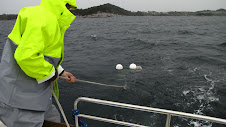
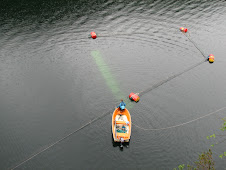
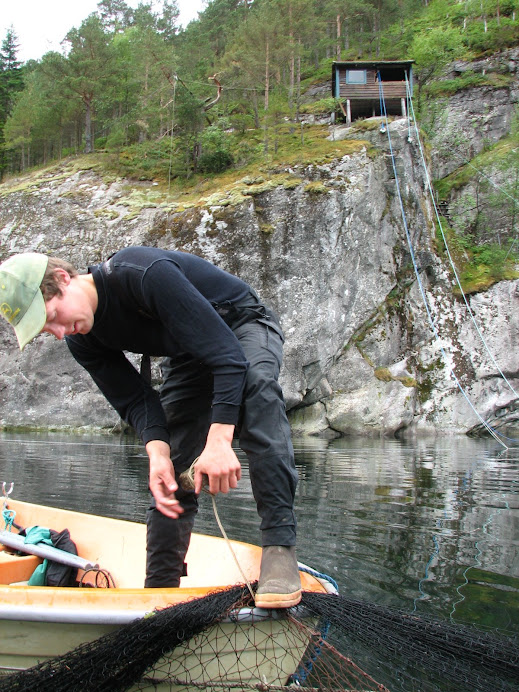
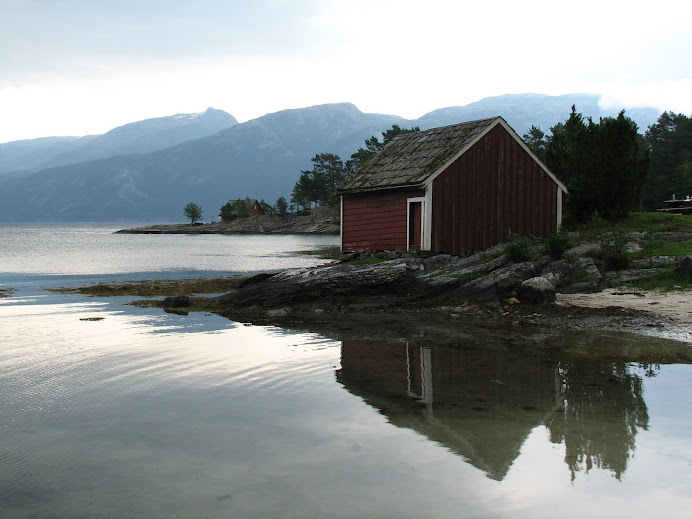
Eirik adding weights to the net

Eirik adding weights to the net
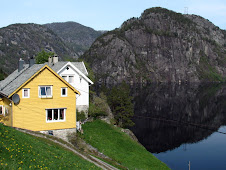
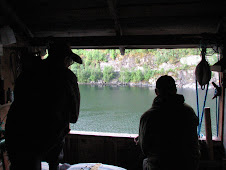
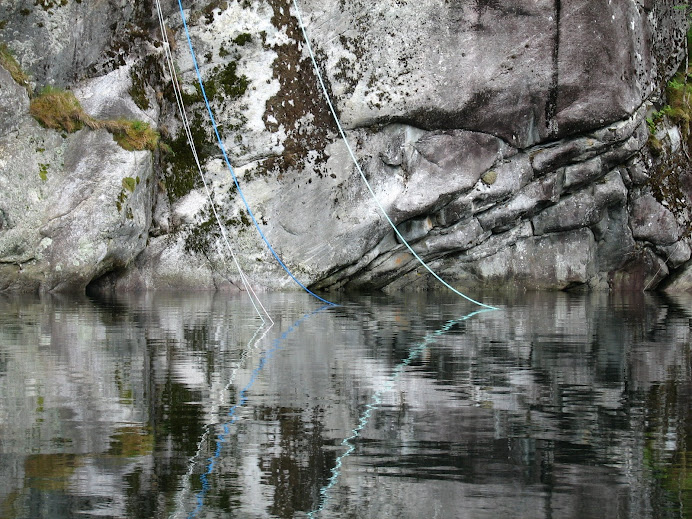
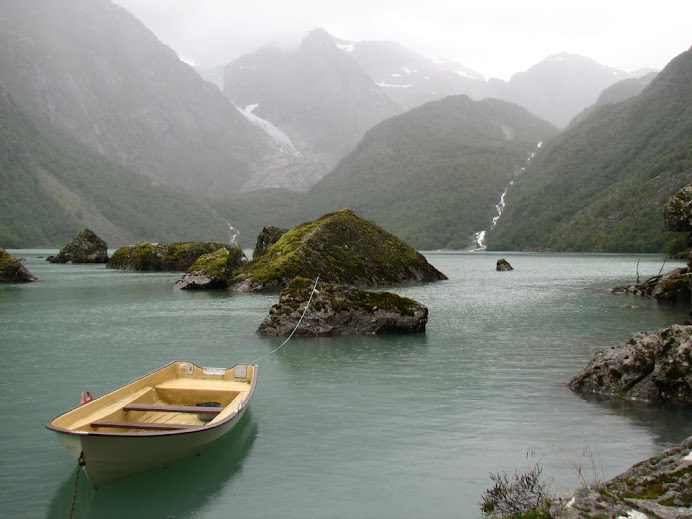
The gilje (fishing cabin) is up on the fjordside in the background.

Saturday, January 3, 2009

Report from Eirik on the 2008 summer of research fishing:

Norsk:
Laksesesongen i år vart prega av mykje oppdrettslaks. 2/3 av laksen var oppdrett. Til saman fekk eg 86 oppdrett og 43 villaks.Dei fleste av laksane fekk eg på Skolmen, men ein del vart og teke i kilenota. Helge Furnes fekk vel cirka 30 laksar. Dette var lite villaks som kom tilbake, sjølv om talet er det høgaste eg har fått nokon gong. På grunn av at innsatsen var stor vart talet høgare enn før, men eg trur nok likevel at det kom att meir laks i år enn i fjor då eg berre fekk 18 villaks. i 2006 trur eg eg fekk ca 40, året før vel 20, så hadde eg vel 40 i 2004 og 41 i 2003. 2003 var det året eg sat på gilja sist.

English:
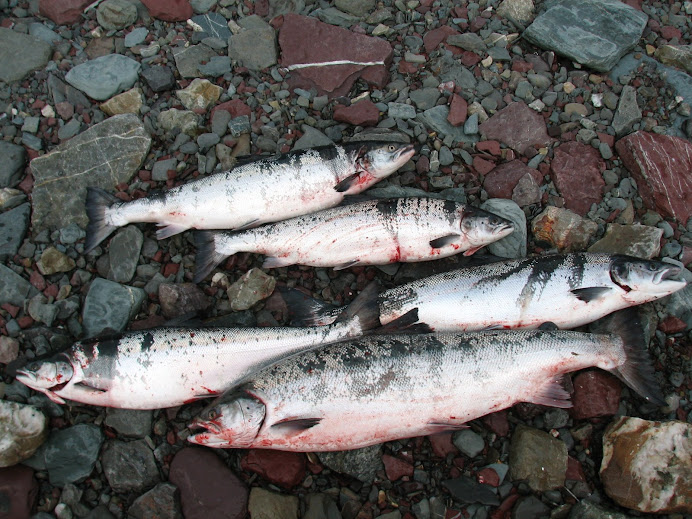
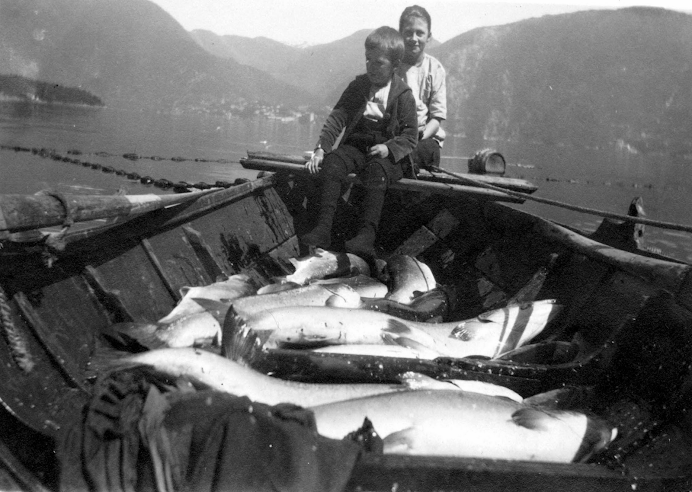
We caught mostly escaped farmed salmon this year - 2/3 of the salmon were farmed. In total I caught 86 farmed and 43 wild salmon. Most of the salmon were caught at Skolmen, but a few of them were caught in the kilenot. Helge Furnes also caught around 30 salmon. This is a very low return of wild salmon, even thought the numbers are the highest I have ever caught. The reason for the higher numbers is that the effort was higher this year than before, but I think even so that more salmon returned this year than last year when I only caught 18 wild salmon. In 2006 I think I caught about 40, and the year before about 20. In 2004 it was 40, and 41 in 2003, the last time that I fished from the gilje.

In Other News:

A documentary about the Vosso salmon restoration project came out in November, 2008 on NRK, the Norwegian public television station, which featured Helge Furnes and Eirik and includes amazing footage of Bolstad fjord and the farm where Helge lives. http://www1.nrk.no/nett-tv/klipp/432343

The report on the Vosso salmon restoration project, "Nå eller aldri for Vossolaksen" (Now or Never for the Vosso Salmon) was also published in November, 2008, including a chapter that I wrote about the cultural importance of the Vosso salmon. It can be accessed here:
http://www.dirnat.no/content.ap?thisId=500037788&language=0

Friday, August 22, 2008

Final week fishing in Stamnes

I was fortunate to spend my final week in Norway with good friends in Stamnes. In addition to spending time with great people in a beautiful place, my hope was to participate in some sitjenot fishing (a traditional set-net gear utilizing a fishing tower and a pulley system that closes the net after fish swim in). Because I left Norway in late June I knew I wouldn’t see the peak of the fishing season, but my timing was great in that I got to help set out the sitjenot! It was a great opportunity to document the process in photographs.

Johannes Gullbrå was instructor, and Eirik Normann was his flink (quick-learning) pupil. Eirik is a local young man who, through his interest, ensures that knowledge of the sitjenot will not go extinct when the older generation is gone. He uses the traditional sitjenot for research fishing, capturing salmon heading up stream and determining whether they are wild salmon or escaped farmed salmon. If they are wild it is possible to find out whether they were produced at the Voss Hatchery if they have a metal snout-mark or if their adipose fin is clipped. As of August 11th, Eirik had caught 22 wild salmon, including 7 with clipped adipose fins from the hatchery, and 40 farmed salmon. At the end of this data will be added to previous 6 years of experimental data that is teaching us more about survival threats for the Vosso salmon. This experiment can help us remove or minimize obstacles to restoration of the Vosso salmon.

Rune Gullbrå and Knut Helge Kulshammar came to visit us out at the gilje (the fishing tower from which fishermen watch the net). It has been many years since these guys ‘sat’ since the fishery was closed in 1992. It is clear that there is a lot of nostalgia around the fishery, and it was hilarious and a great privilege to hang out with them in the gilje while they recounted fishing tales – the glory moments when it was horrible weather and impossible to see, but for some reason they knew something was happening and there were 15 salmon in the net. Stories of the old timers, the names carved into the wooden walls marking who sat together each year – Rune and Knut Helge had definitely sat together a few times. By the end of a few seasons these people knew each other almost like brothers.

I was staying with one of the Stamnes fishermen named Hallstein Leiren. He suggested that we invite everyone to a barbecue in honor the Vosso salmon and my departure from Norway. Our plan was to have the party out on a little island owned by Ola Kvamme, but the weather turned very sour. We aborted the island plan and strung up a large tarp over Hallstein’s backyard. 20 people came with food and smiles, including people from Voss and Bolstad up the river. People enjoyed exchanging fishing stories. I was touched when the folks from Voss Hatchery presented me with a gift – a painting of a waterfall near Voss – and thanked me for my efforts on behalf of the Vosso salmon and their communities.

I was also able to thank all of these people for welcoming me into their community so warmly – for one of the most incredible experiences of my life.

Sunday, July 20, 2008

Fishing in Tanafjord

Many people told me that a year studying wild salmon in Norway would not be complete without a trip to the north of Norway to see the productive salmon runs of the Tana and Alta fjords.  Although there is some limited commercial fishing for salmon with fixed nets all along the coast of Norway, the larger salmon runs in the far north have continued to support the longest fishing seasons in the country.  The area is also beloved by sportsfishermen for large and plentiful salmon.

When I was in Tromso in March I met several fisheries scholars, and one of them was able to put me in touch with with a native Sami salmon fisherman from the Tanafjord.  I called Jan Larsen and asked him whether I could come 'help' him fish for a week or so.  He was not a man of many words, but he indicated that I could come.  So on June 6th I flew from Bergen to Kirkenes, far to the north near the Russian and Finnish borders.  

The Tana River crosses the border into Finland, and management of this salmon run is thus more complex than in other Norwegian rivers.  In recent years the Norwegian government has begun to reduce fishing time in the Tana system due to declines in salmon runs.  Despite conservation concerns, these reductions are met with significant resistance from the predominantly Sea-Sami population, who see salmon fishing as one of the important pillars of their local culture and economy.

Jan Larsen and his brother, Trygve, have both fished for salmon since they were young, in addition to other fisheries.  Trygve also fishes 'rogn-kjeks', a species of lumpsucker fish that is plump with caviar.  Their home is in Vestre Tana, but from Monday at 6 pm to Friday at 6pm - the period when salmon fishing is allowed - they travel out to their cabin on the fjord near their fishing sites.  They use both krokgarns and kilenots to fish, two different kinds of set-nets.  A krokgarn is a gillnet that is set up in two hooks, with a 'leading net' diverting fish into the gillnet area.  A kilenot is a hanging fish-trap of sorts.  A fish that swims in to a kilenot through a series of openings will not be able to find its way out again.

The week before I came to Tanafjord Jan caught 14 Atlantic salmon.  He had higher hopes for the week I was there, thinking that we might be able to catch up to 100 fish.  However, we ended up with only 9 for the entire week.  For a while they blamed having a woman around for the poor catch, but then I reminded them that we caught 150,000 pounds of sockeye last year in Bristol Bay when I was on board, so they couldn't blame me ;)

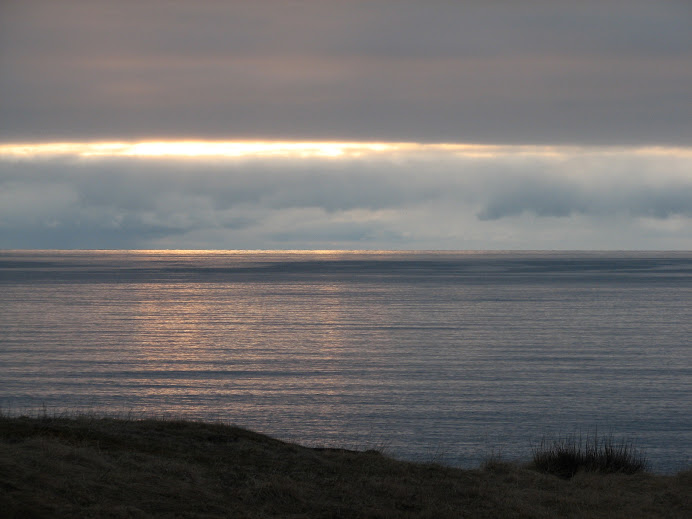
Despite our poor catch that week, it was an amazing experience to get to know Jan and Trygve and the rest of their family, to grill wild Atlantic salmon over an open fire in the heart of one of Norway's wildest fjord-systems, and to see real salmon fishing in action in Norway.  I was also able to take side-trips up into the mountains into the territory on the Mountain-Sami people, and during my last two days in Finnmark I caught a ride up the cape to Mehamn, one of the northernmost communities in the world.  I stayed with one of Jan's relatives up there and watched the midnight sun set over the northern ocean.

Wednesday, July 16, 2008

Sailing with Arne

I apologize for the long break in entries. I have been traveling without access to internet for a long time, including a 3-day sailing/rowing trip in with Arne Vassenden, a trip to Tanafjord to help Jan Jensen fish for salmon with krokgarn, some time in Stamnes helping Eirik and Johannes set out a sitjenot... and then I travled home to the US and have been out fishing in Bristol Bay for the past weeks.

Each of these mini adventures deserves it's own entry. I'm going to start with the sailing trip and wait a few days before I add more.

-------------------

Sailing in Sogn og Fjordane

In early May I got a phone call from Arne Vassenden, a nice fellow I had met at a meeting in Voss in December. He had mentioned that he knew some salmon fishermen in the Sogn og Fjordane region (north of the Bergen area), but I never took him up on his offer to set up meetings because I ended up focusing my research closer to Bergen. However, when Arne called he wondered whether I would be interested in taking a sailing trip with him to some of the outer islands outside Sognefjord in June to meet a few fishermen and see some of the most beautiful coastal area in Norway. It's not often someone calls and offers you exactly what you've been dreaming about!

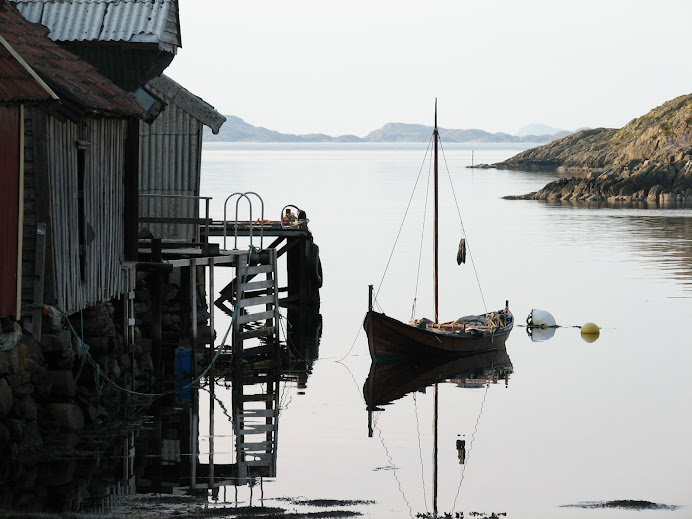
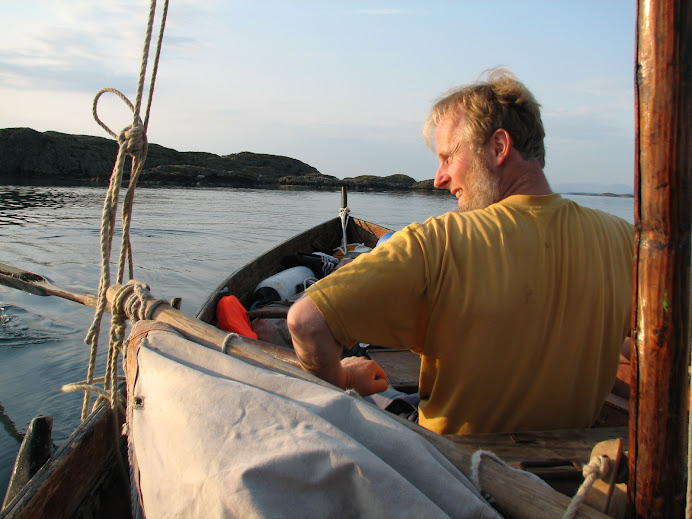
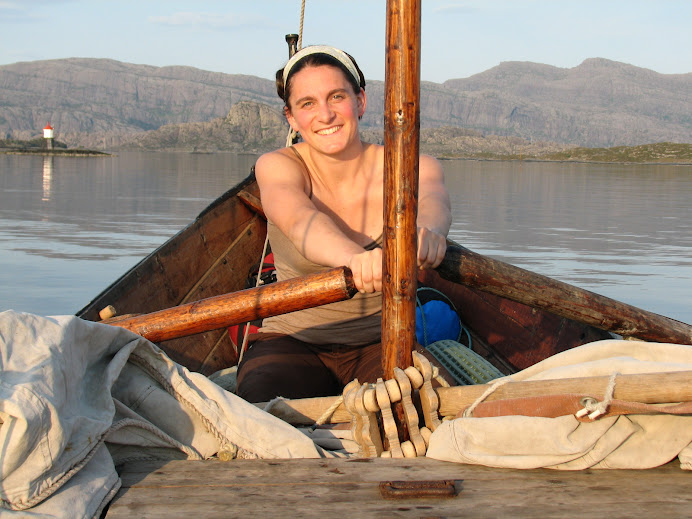
On June 3rd I took the Hurtigbåt (fast boat) from Bergen to Krakhella, then took a bus to Hardbakke to meet Arne and his boat. The boat is a 100-year old wooden rowboat with a viking-style sail and place for max 6 oars. A beautiful craft. For the next three days we would sail west and then north, using wind when we had it and rowing when we didn't. Amazingly the ocean was flat calm and the sky cloud-free during the entire voyage. This led to sunburn and frequent swimming.

Although we did not have midnight sun the light lingered through the night, and it was sometimes hard to remember to go to bed. Sunset faded into sunrise, and I woke up to some of the most breathtaking views I have ever seen. On the second night we camped on top of Alden, a prominent landmark for fishermen in the region because of its relative height. From Alden we could see far in all directions, including a view over Bulandet and Vaerlandet, our destination for the third and final day.

Arne was right - this area of the Norwegian coast is very special. There are no roads out to these intricate, exposed islands. Vaerlandet is known as the 'Venice of Norway' because it is made up of so many tightly spaced small islands with bridges running here and there between them. I can imagine that a bike tour to Vaerlandet would be an amazing vacation, although the fun of sailing through the tiny waterways would be hard to beat. Once we thought the mast would not clear a one-lane cement bridge, but we managed to tilt the boat hard as we rowed slowly under and we snuk through.

One of the most amazing things about Norway is the effectiveness of public transportation connections to the city even from so far out in the middle of nowhere. On the morning of the 4th day I took the early bus from the outer edge of the islands to a ferry that connected to the Hurtigbåt back in Krakhella and returned me to Bergen a few hours later.

Thank you, Arne!

Saturday, May 24, 2008

Ole goes to the doctor...

Lena had been pestering Ole to go to the doctor and get a check up for a long time, and finally when Ole was feeling "not so good" he went in to find out what was wrong. It didn't take the doctor long to find that Ole was full of cancer and had no more than a couple of weeks to live. Well, the diagnosis made Ole feel even worse, and he went home to spend his last days. He was in the upstairs bedroom on his deathbed a week later, and feeling worse than ever, when he noticed the most wonderful smell wafting up the stairs. Lena was making lefse down in the kitchen! It smelled so good to Ole that he dragged himself out of bed, down the stairs, and across the kitchen. He was reaching up for a piece of lefse when Lena rapped him on the knuckles and scolded, "That's not for you Ole! It's for the funeral!"

(This joke submission from Keith Anderson. Thanks!)

Tuesday, May 20, 2008

Ole and Lena stranded on an uninhabited island...

Ole and Lena were the only survivors from a steamboat sinking in the South Seas. They separately made their way to un uninhabited island. Ole was pretty shy, so he didn't talk much with Lena. But one day, after a few months, Lena could stand the loneliness not longer. She cornered Ole and said, suggestively, "Ole, you got what I want, and I got what you want." Ole thought for a moment and his face suddenly brightened. "Lena, you got snoose!!!????"

(Thanks to Don McManman for the joke submission!)

Friday, May 16, 2008

Spring

After one of the most rainy experiences of my life (Fall and Winter in Bergen), it has been like a persistent dream in April and May with several week long stretches of sunshine and temperatures up in the mid teens! I don’t know if this craze has hit in the U.S., but here the one-time-use grill is a popular item, and when the sun came people and one-time-use grills began to fill every possible inch of green space in Bergen overnight. The first few days they were piled high next to the garbage cans, but then the city got wise and set out one-time-use grill receptacles in strategic locations.

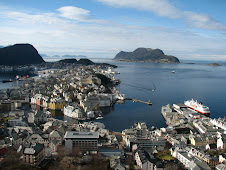
I am aware that my time here is growing short. And even though I’m nearing deadlines with work, I appreciate being here every day. As I bike home out the peninsula I take in the 360 views – Bryggen, Rosencrantz Fortress to the east, the Hurtigruten, sailboats, Verftet to the west. Water and mountains in all directions. Colorful houses woven along cobblestone streets and steeply up the hillsides amidst new-leafed trees. This is a gorgeous city, worthy of the devotion of its locals despite the rainy times (which are of course also beautiful).

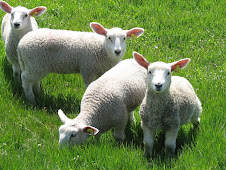
I’ve been lucky to able to share this place with several friends from home in recent weeks! Claire Eager came in late April and we had a great time, especially on our weekend trip to one of my field work sites. We were able to stay in an extra house owned by Ingebrigt, whose father recently moved to a retirement home down the hill. Ingebrigt is one of the crew from Stamnes who used to fish for salmon before the collapse of the Vosso stock. Now he has a real job in a nearby town, and he also keeps some animals. We visited right in the middle of lambing, and Claire and I watched 3 little lambs come into the world.

Last week Eliza Hudson was here! I had been saving the hike from Fløien to Ulriken to do while she was here, and we were lucky to have a beautiful sunny day. Sasha and Alexandra were with us too – Sasha and I took the opportunity to dunk in a partially ice-covered pond along the way to welcome spring. Life has gotten quite busy lately, but Eliza was a great guest and just came along for the ride – and a beautiful ride it was, including a lunch invitation to a farm perched on the steep fjordside. The farm is not connected to any road system, and it is amazing to think of all the work that Helge and Kjersti have done over the years, ferrying goods across the fjord on a suspended trolley. It was a taste of the older, pre-oil Norway – people of the generation that doesn’t speak English, rømmegrøt made from fresh cowsmilk, little lambs frolicking… again sunshine and perfect reflections on the fjord.

It’s hard to believe that I will be moving out of my lovely apartment in a few weeks and moving on to other adventures. But this spring in Bergen has been one to remember.

Happy 17. Mai!!